

5 min read
What Is a Roof Garden?
What Is a Roof Garden? Everything You Need to Know About Roof Gardens
Air quality in urban areas is getting worse by the day. Green spaces disappear to make room for multi-story construction, and as vegetation declines, cities face heavier air pollution. Another growing issue is the urban heat island effect, where temperatures inside the city are higher than in surrounding areas. Just take a look at Tehran to see the depth of the crisis—air pollution, overdevelopment, and shrinking green space. Yet there is an effective solution that can help: roof gardens. In this article from Materino, we take a complete look at roof gardens.
What Is a Roof Garden?
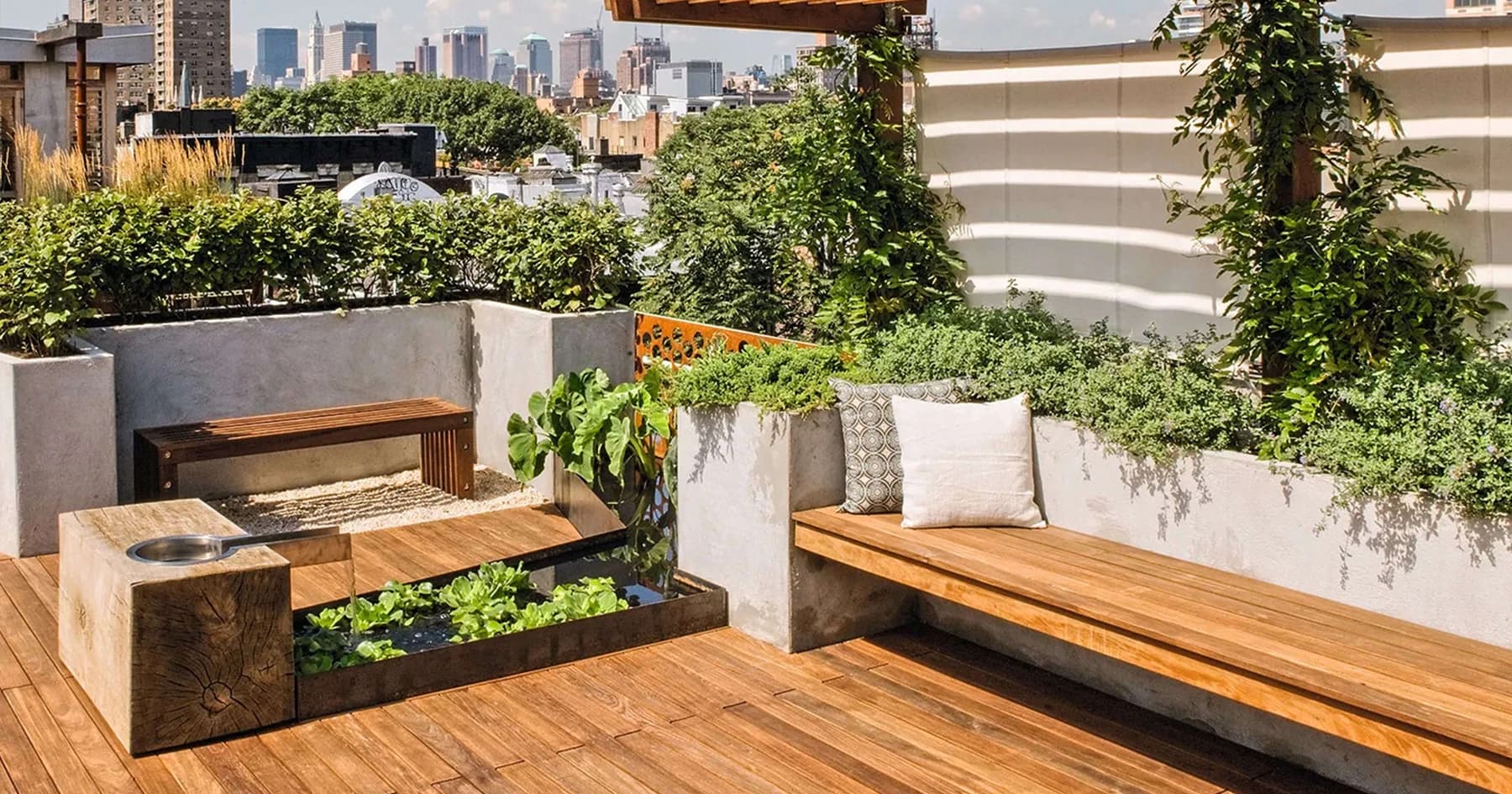
A roof garden (also known as a green roof, rooftop garden, or living roof) is essentially a garden built on top of a building. In other words, it is a human-made green space created at the highest level of residential, office, commercial, and other buildings.
A roof garden is an engineered system. Beneath the plants and green coverage, multiple technical layers are installed, including:
- a waterproof membrane
- insulation layers
- a soil filter layer
- drainage layers
In addition to plants, a roof garden can include features such as a pergola, lighting system, fire pit, retractable roof, barbecue area, and more. Together, these elements turn a rooftop into a space that supports wellbeing and a healthier lifestyle. The main goal is to give residents access to their own green space inside the city. Roof gardens can also improve air quality, reduce noise pollution, and enhance the city skyline—while helping solve the shortage of ground-level green areas.
A Brief History of Roof Gardens
Green roofs date back thousands of years. The most famous historical example is the Hanging Gardens of Babylon, one of the Seven Wonders of the Ancient World, built around 500 BCE. This remarkable structure featured an engineered irrigation system made from layers of reeds and thick bitumen. The exterior reflected an earthly paradise, with terraced gardens rising from the lowest levels to the top.
Throughout history, roof gardens appeared in many places, but modern green-roof technology advanced significantly during the 1960s, particularly in German-speaking countries such as Germany, Austria, and Switzerland. These countries became pioneers by developing lighter roof systems, advanced irrigation solutions, and effective roof-leak protection. Today, many countries legally encourage or require green roofs as part of long-term sustainability strategies.
Benefits of a Roof Garden
Once you understand the advantages of green roofs, you may seriously consider building one. Key benefits include:
- Whether for a friendly gathering or a simple walk, a roof garden creates a great space for relaxation and reconnecting with nature.
- Daily routines often bring mental and physical fatigue. Roof gardens can support mental wellbeing and boost overall vitality.
- Spending time at a higher elevation in a green setting can feel uniquely enjoyable—and rooftop greenery improves the city’s visual horizon.
- A rooftop garden provides a venue for events such as birthdays, engagements, anniversaries, and more.
- Green roofs improve air quality: plants filter dust and pollutants and help reduce environmental contamination.
- Roof gardens reduce the urban heat island effect, lowering rooftop temperatures and creating a cooler microclimate.
- A roof garden can increase property value by improving aesthetics and adding a highly functional feature to the building.
- Green roofs help reduce noise pollution by acting as a natural acoustic barrier.
- Roof gardens support urban agriculture, allowing residents to grow vegetables, fruits, and medicinal plants.
Types of Roof Gardens
Roof gardens are categorized based on their design goals and structural characteristics. Understanding each type helps you choose the right option for your building.
1) Extensive Green Roof
An extensive green roof requires minimal maintenance because its growing environment is simpler and shallower. The plant cover typically includes mosses, small plants and flowers, wild grasses, and succulents. It is easier and more cost-effective to install due to lower maintenance needs and simpler irrigation.
Key characteristics:
- Soil depth: low, typically 5–15 cm
- Plants: low-maintenance, drought-resistant, shallow-rooted species
- Weight: lightweight, suitable for buildings with lower load capacity
- Maintenance: low (basic watering, fertilizing, pruning)
- Best for: smaller-scale buildings
2) Semi-Intensive Green Roof
A semi-intensive green roof combines features of both extensive and intensive systems. It usually includes small plants, lawn areas, and small shrubs, with moderate irrigation and maintenance needs. These rooftops may include added amenities such as children’s play areas and event-friendly features.
Key characteristics:
- Soil depth: medium, typically 15–30 cm
- Plants: a mix of low-maintenance plants and larger species
- Weight: medium, requires stronger structural capacity
- Maintenance: moderate (watering, fertilizing, pruning)
- Best for: mid-scale buildings
3) Intensive Green Roof
An intensive (dense) green roof offers high potential for creative landscaping and biodiversity. It can function like a rooftop park, but it requires advanced care and often an irrigation system with higher capacity. It also usually demands more rooftop space.
Key characteristics:
- Soil depth: high, typically over 30 cm
- Plants: larger plants, trees, shrubs, and ornamental flowers
- Weight: heavy, suitable for buildings with high load tolerance
- Maintenance: high (regular irrigation, pruning, fertilizing)
- Best for: large-scale buildings
How Roof Gardens Are Built
In theory, a green roof can be installed on almost any building with a flat roof—residential towers, villas, office buildings, hotels, educational centers, and more. However, the execution depends on factors such as roof size, building conditions (load capacity and roof surface quality), intended use, materials, budget, and more. Roof gardens typically follow these steps:
- Initial feasibility study: structural analysis, climate conditions, and project goals
- Roof garden design: type selection, layer design, plant selection, and layout planning
- Roof preparation: cleaning the roof, installing insulation and root barrier layers
- Core layer installation: drainage layer, filter layer, soil layer, and planting
- Irrigation system installation: drip irrigation setup, water source connection, and system testing
- Finalization and commissioning: final coverings, installation of accessories and features
- Care and maintenance: watering, pruning, fertilizing in the first month, and regular layer inspections
Final Thoughts
People love green spaces, and a rooftop garden can be a powerful expression of that need—especially in dense urban environments. Building a roof garden may seem expensive at first, but it delivers significant long-term value. You gain a private green retreat that brings freshness and energy, a great place for gatherings, and even a potential income source if the space is used for events. It can also raise property value and stand out as a unique selling feature. Overall, green roofs improve both individual wellbeing and the broader livability of cities.
If you want to create a beautiful, distinctive roof garden on your building, Materino can provide high-quality materials and solutions. For product review, pricing inquiries, and order registration, consult our experts.