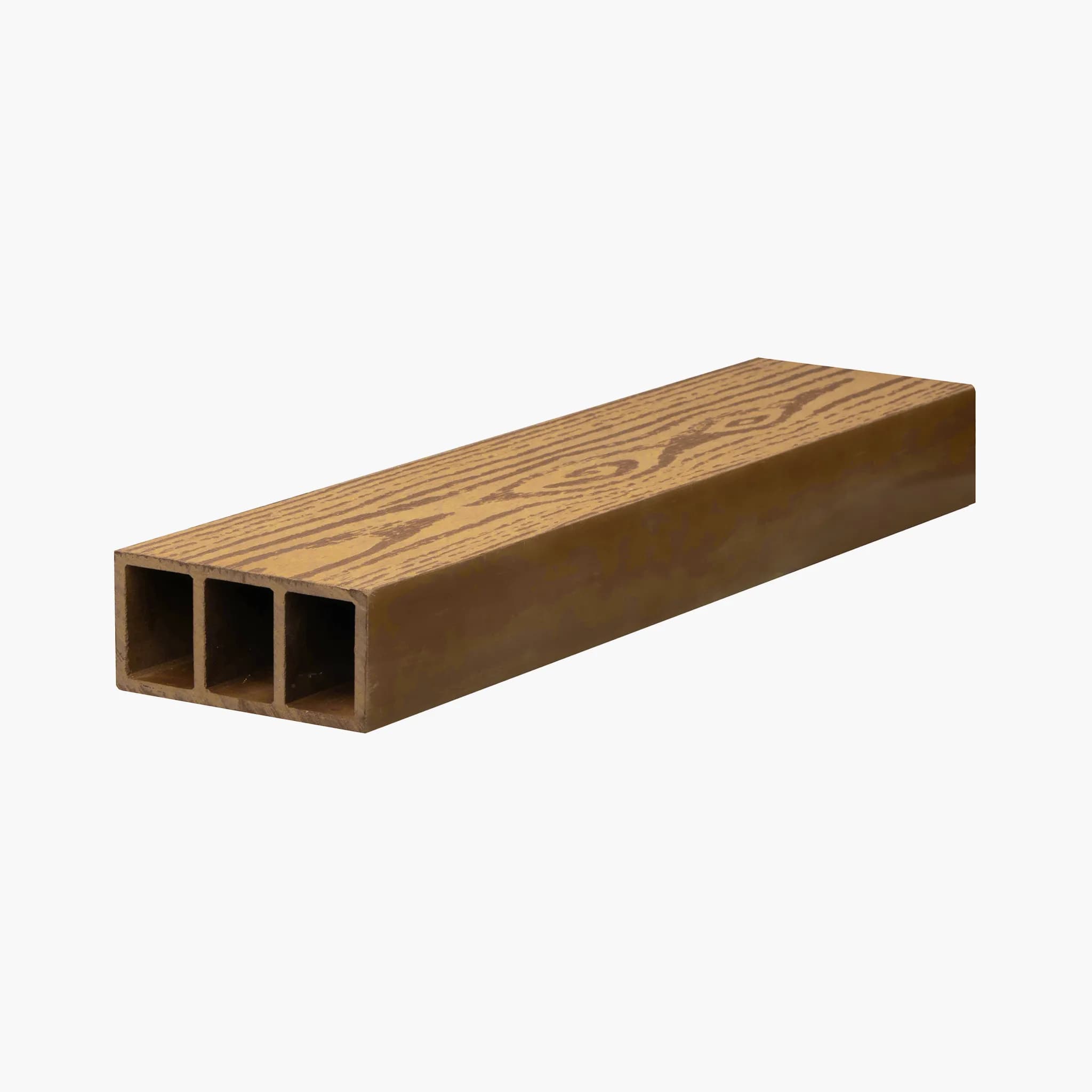
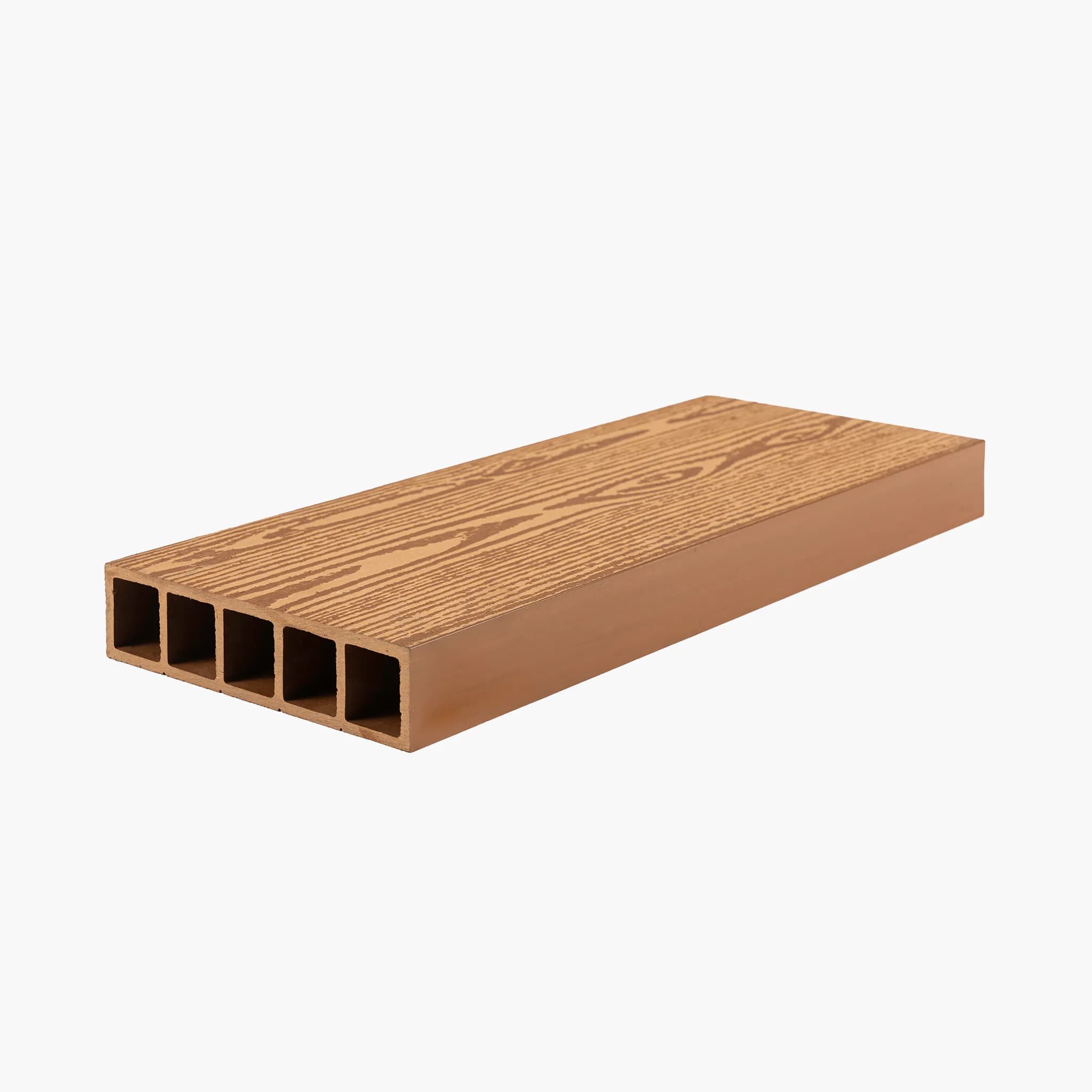
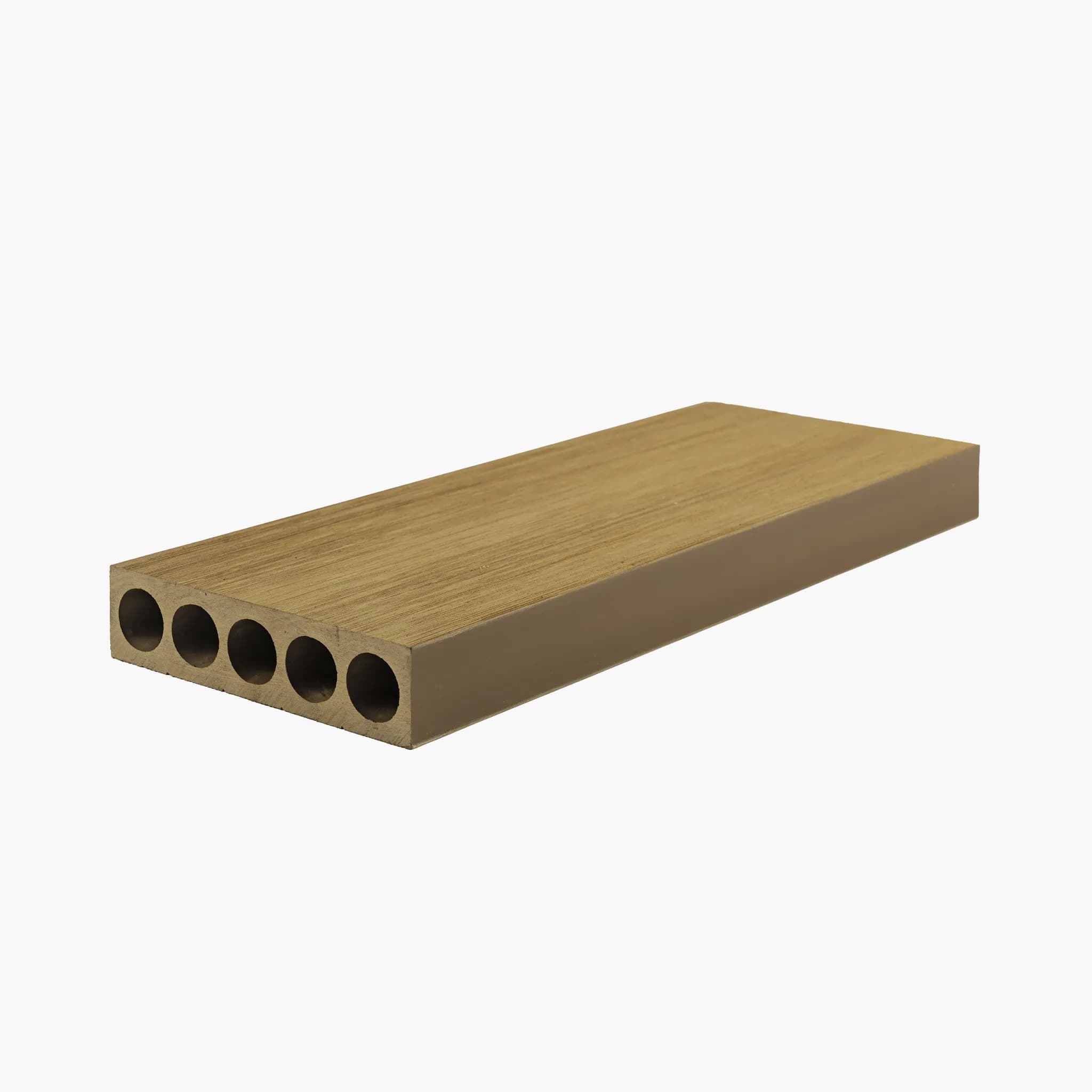
A WPC Louver is a professional solution for shading, privacy control, light regulation, and modern façade design—offering the natural look of wood combined with the durability of polymer materials.
WPC louvers are typically installed as linear blades (vertical or horizontal) and are widely used in building façades, outdoor spaces, and exterior structures such as pergolas, gazebos, and decorative walls.
Applications of WPC Louvers
- Building façades (architectural louvers for light control and visual rhythm)
- Privacy screens and partitions (yards, terraces, rooftops, pool areas)
- Pergola and shading blades (sun control and filtered light)
- Decorative wall cladding and semi-open TV walls
- Outdoor partitions to separate functional zones (e.g. seating and barbecue areas)
- Lightweight ceiling covers and under-roof decorative elements
- Modern fences and railings with clean, linear, minimalist design
Advantages of WPC Louvers
- High resistance to moisture and rain, ideal for outdoor environments
- Excellent durability against sunlight and temperature changes, with better color stability than natural wood
- Low maintenance, no need for periodic painting, oiling, or resin treatment (unlike thermowood)
- Clean and uniform appearance with parallel lines and modern architectural aesthetics
- Resistant to termites, insects, and decay
- Flexible design options (vertical or horizontal installation, adjustable spacing, color combinations)
- Recyclable material, making it a more sustainable choice compared to many alternatives
Common WPC Louver Profiles by Materino
Depending on project requirements—such as privacy level, shading intensity, or structural strength—different louver profiles can be used, for example:
- P3 Profile (5×10 cm Louver):
Ideal for lighter, decorative applications with a higher number of blades - P2 Profile (5×20 cm Heavy Louver):
Suitable for stronger privacy screens, façades, and more robust outdoor structures
The exact profile selection and substructure spacing depend on span length, installation location, and intended use.
Key Design & Installation Considerations
- Installation direction:
Vertical louvers visually elongate façades, while horizontal louvers emphasize width and improve privacy control. - Blade spacing:
Smaller spacing provides more shade and privacy; wider spacing allows more light and visibility. - Proper substructure:
Steel or metal subframes (e.g. 4×4 cm box profiles) must be level, rigid, and corrosion-resistant. - Connections and framing:
Using proper frames and corner profiles ensures a clean, integrated, and professional final appearance. - Climate and usage:
In hot, sunny, or humid regions, installation details and spacing play a critical role in long-term performance.
Color Options & Final Appearance
WPC louvers can be easily coordinated with other façade and landscape materials. Standard colors are available, along with custom color options for special projects.
For light or dark façades, or combinations with stone and glass, color recommendations can be tailored to the architectural style of the project.
Maintenance of WPC Louvers
Maintenance is simple and minimal:
- Periodic cleaning with water and mild detergent
- Avoid strong impacts or sharp tools
- Annual inspection of fasteners and substructure, especially in windy areas